In the middle of the town of Agia Napa, which is about 15 kilometers from Cape Greko, the extreme southeast tip of Cyprus, the Agia Napa Monastery is the most significant landmark of the town of Agia Napa, or, as many call it, Ayia Napa. The date of the founding of the monastery is not precisely fixed, although there is a large sycamore tree outside its south gate which is thought to be 600 years old. The tree is magnificently massive, its spreading branches propped up by steel posts to keep them from collapsing. The tree came first, and then the monastery.
The monastery is next to the town's main square. At any rate the monastery pre-dates the town, because the town takes its name from the monastery. The name's origin comes from "Agia," or "Holy," and "Napa," or "wooded valley." A forest, now long-gone, surrounded the monastery at its founding.
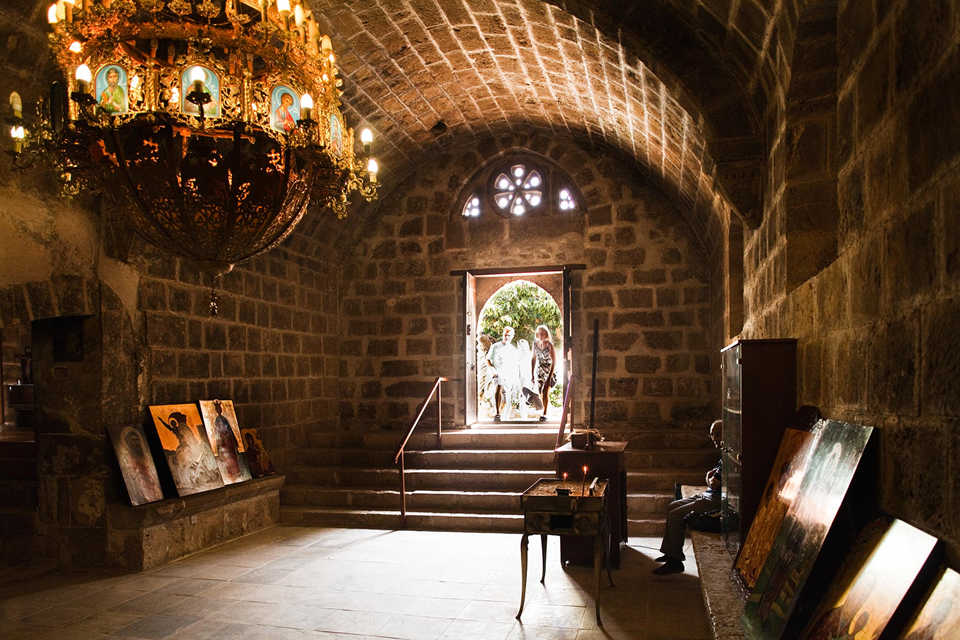
The best guess is that the monastery was founded sometime during the Venetian rule of Cyprus (1489-1570). It is built rather like a small fortress than a monastery proper, which makes sense since Agia Napa is a seaside town and thus vulnerable to pirate attack and other depredations from unfriendly powers in the region. At first glance, the monastery resembles the Alamo in San Antonio, Texas, the mission/fortress built by the Spaniards in the18th century. At the site of the monastery there was (and still is) cave, where a church was founded after a hunter, tradition says, found an icon of the Virgin Mary. Part of the monastery's church is the cave, in addition to some which is cut out of the rock below grade level.
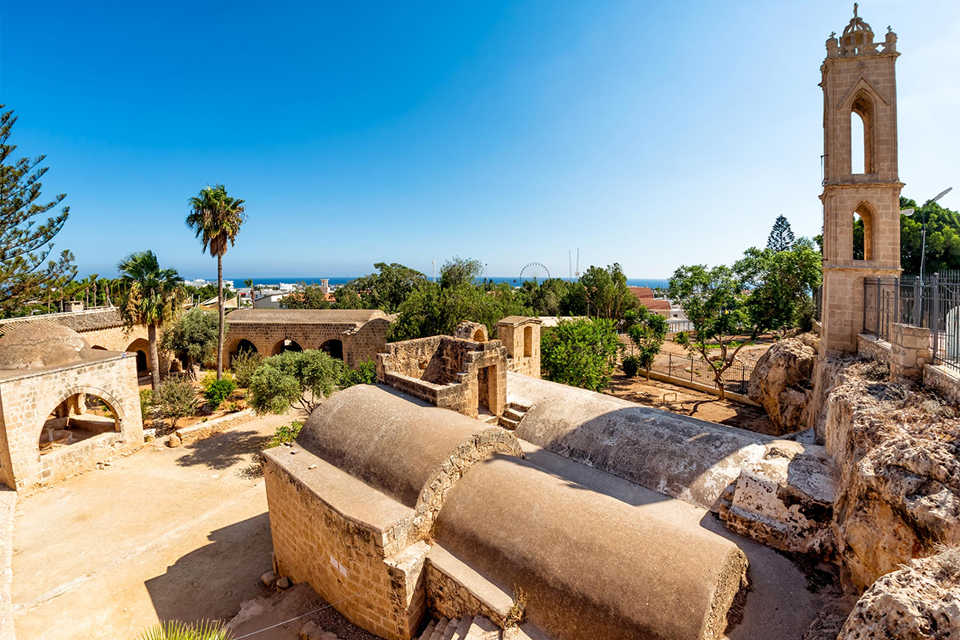
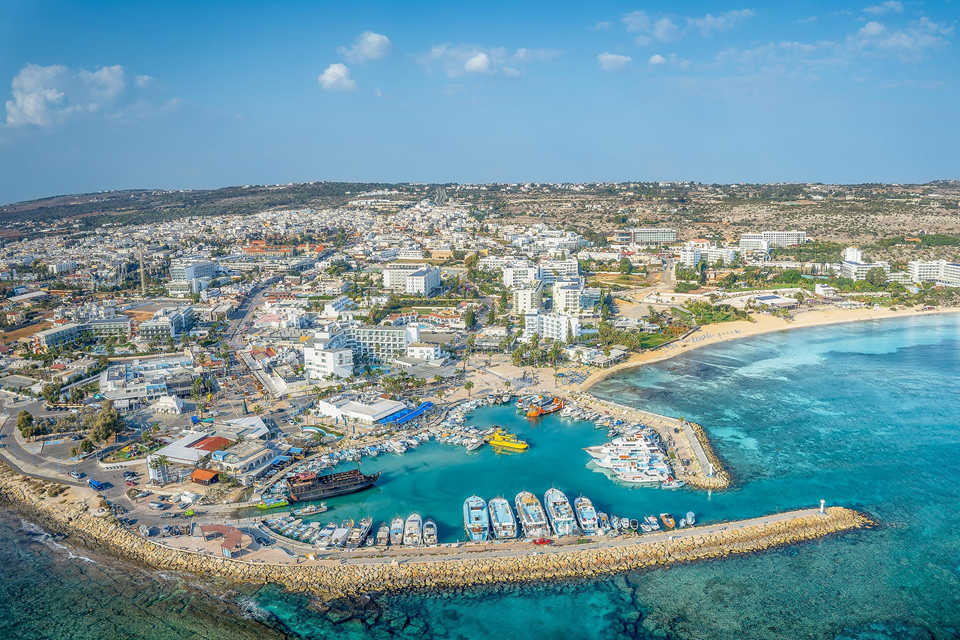
The monastery is an oasis of quiet in the midst of what is by reputation the hardest-partying town in Cyprus. Agia Napa is known for its breakfast beers, cocktails mixed in fishbowls, and free shots for those on pub crawls. The town has at least a dozen nightclubs and more than 80 bars- all of this in a village of less than 3,000 year-round residents. Then there's the monastery, cheek-by-jowl with some of the more popular nightclubs in Agia Napa's main square.
The monastery is the perfect place to go if you feel like repenting after a night of debauchery at the nearby nightspots- you enter an arcaded courtyard and are greeted immediately with the hush that seems to pervade all places where the spirit is emphasized over the flesh.
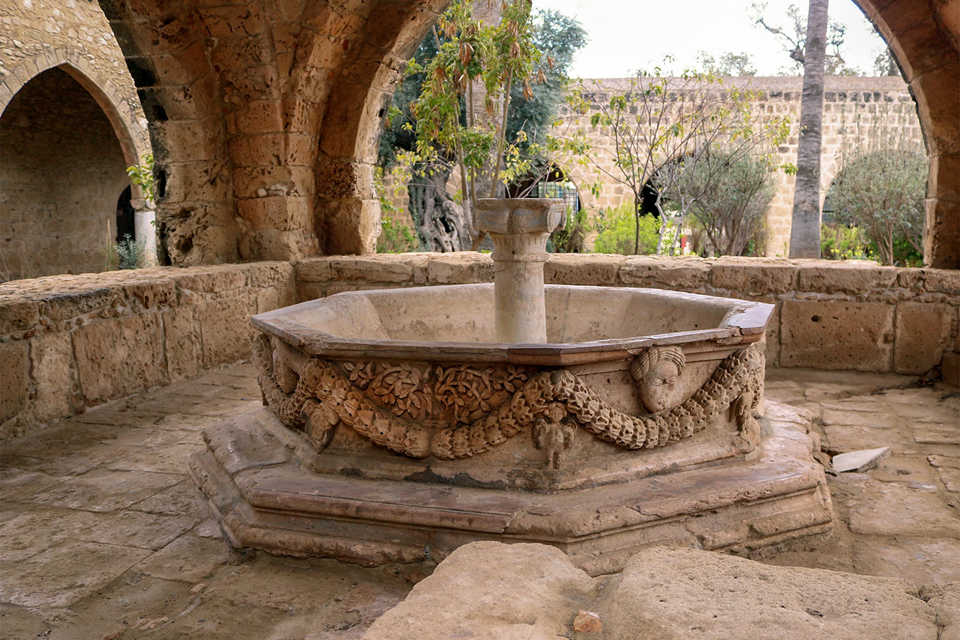
A factor in the monastery being shielded from the surrounding noise is that its grounds are well below street level, a common occurrence with older monuments: the town or city around them is slowly raised by the practice of building upon the rubble below them while the centuries pass. There is a 7-sided fountain in the courtyard, shaded by a domed limestone structure built like a miniature Byzantine-style church with a low wall and a Moorish arch on each of its four sides. Out of the center of the now-dry fountain rises a single column. There is a local legend about a Venetian princess who was buried under the fountain.
The last monks served here in 1758, but the monastery continues to be a locus of spiritual activity in a town that could use a bit of that sort of thing. The grounds were restored in the 1950's-1970's, and now serve as an ecumenical conference center for churches in Cyprus and the Middle East, and also hosts a variety of cultural events.