Cape Greco proper is a one kilometer by one kilometer arrowhead-shaped headland which marks the most southeasterly point of Cyprus. It is also considered the southeast tip of Europe. The peninsula is rocky, with some trees and shrubs here and there. Much of its shoreline is defined by low cliffs and sea caves. The cape is a protected nature park. In its turn, the cape is part of a longer peninsula- resembling a rather fat "shaft" attached to the "arrowhead-" which is also commonly known, in the regional sense, as Cape Greko.
Just nine kilometers from the hottest party spot in Cyprus, Agia Napa, this place is the diametrical opposite. The eastern part of Cyprus, including Agia Napa, has the best beaches. For those, however, who are not crazy about the crazy scene at Agia Napa, Cape Greco is an oasis of peace and quiet, and beautiful water.
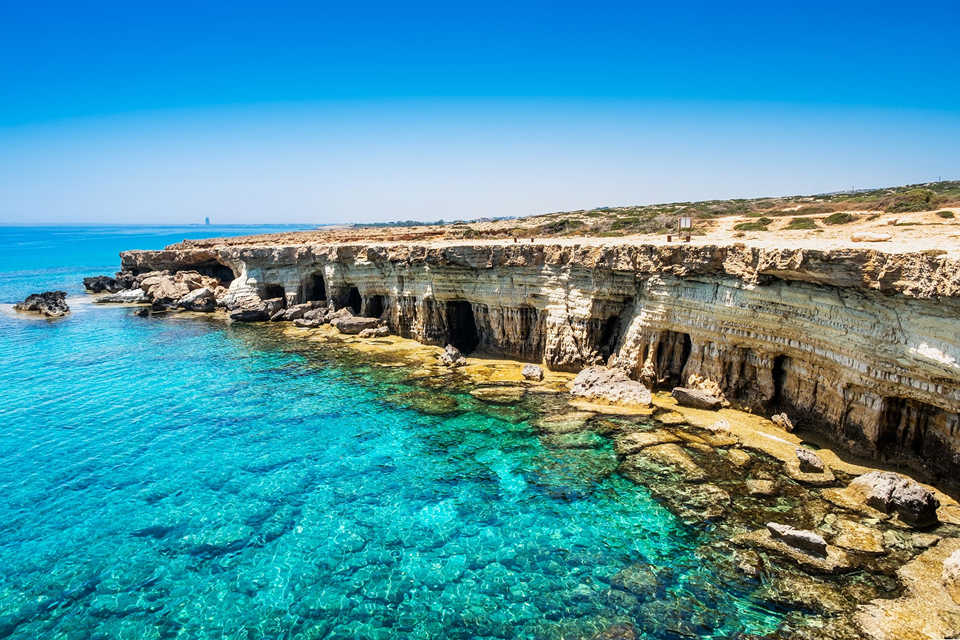
Most of the peninsula is national park territory, with several fine and well-marked hiking paths. Along these paths are wooden benches placed to give you the finest views over the sea that are available. One trail from the chapel of Agioi Anargyroi on the east coast, only takes 45 minutes, and has no hills to speak of. In addition, there is the 90-minute Agioi Anargyroi-Sea Caves trail, which will lead you south from the chapel and over the Kamara tou Koraka, a natural bridge carved out of the limestone by the action of the sea.
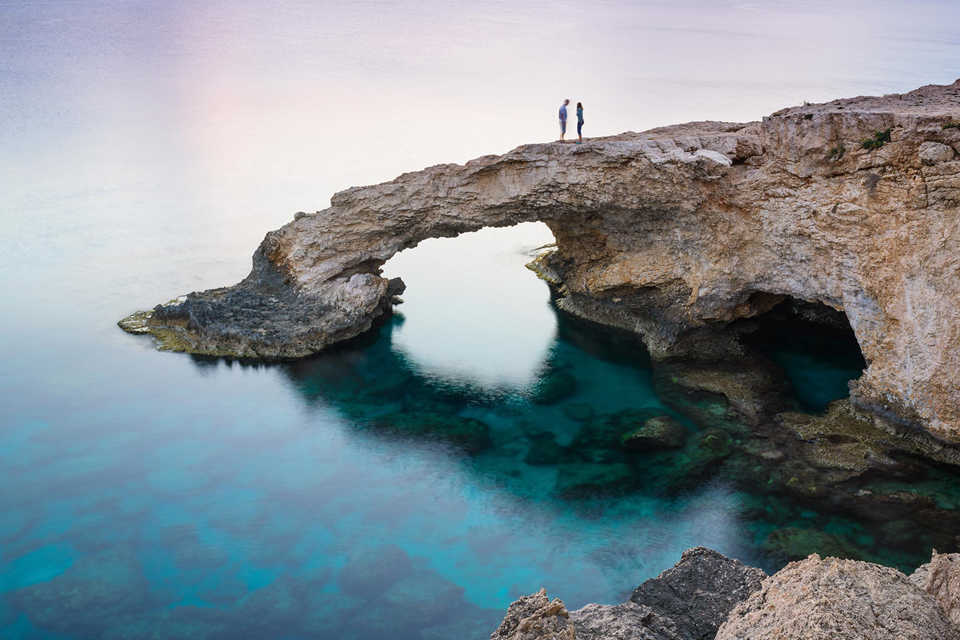
Other trails include one that is part of the European Long Distance Trail E4, which starts in Cyprus and ends at Gibraltar. The Aphrodite Nature Trail is a two kilometer stretch on the east coast. Yet another leads down to the "Cyclops Cave," one of a number of such caves to be found in the eastern Mediterranean. Many of these trails pass close to beaches which can be used to take a refreshing swim break.
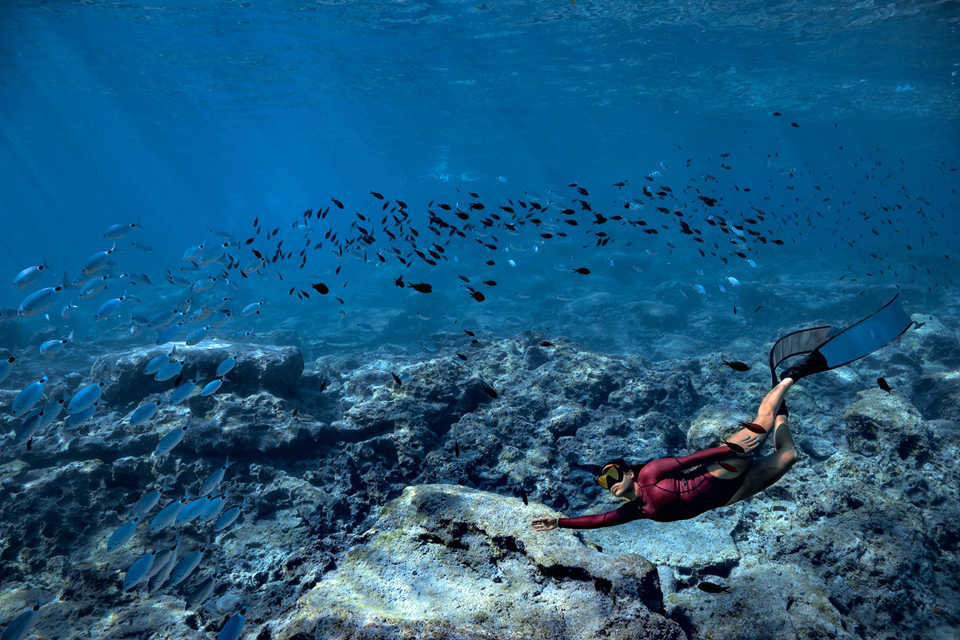
There are a number of cave dive sites along the coast, including one at Agioi Anargyroi, and another just a few kilometers north. These sites are organized with equipment rental and guides. Visibility in these waters can be as much as forty meters. If you Google around a bit you can get more information.
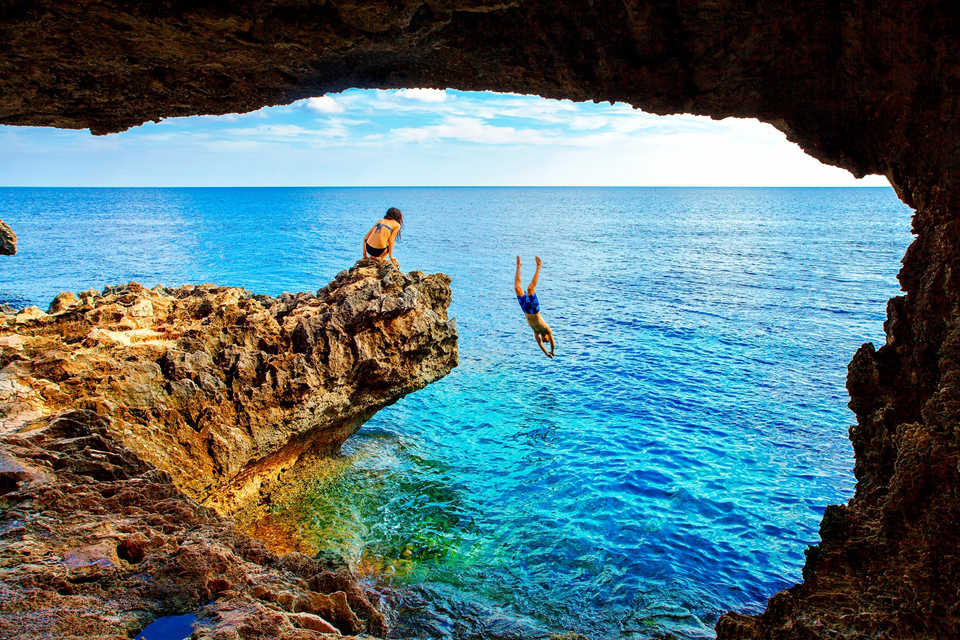
A popular past time is diving off the cliffs into the azure waters from heights as great as 15-20 meters, but it's an activity not designed for the faint of heart, and can be downright dangerous, with serious injuries occurring every year. Just a quick perusal of the news as I write this shows a Greek tourist with spinal cord injuries suffered recently and another tourist this season who died of head injuries. So, a word to the wise.
What vegetation there is, is mostly of the evergreen variety, with plants such as the Phoenicean Juniper, which is the dominant plant, and a number of others. As far as animals, foxes, hares, hedgehogs, snakes, lizards, and butterflies have all made the cape their home. In addition a number of migratory bird species use the cape as a stopover.
One of the best ways to explore the cave-scalloped shoreline of Cape Greco is with a kayak, which provides superb maneuverability in and out of the many inlets, caves, and rocks along the shore.
Being the southeast tip of Europe, with Syria being the closest landfall to the west, invaders and explorers from the east would always make landfall here first. If you know where to look (a good guide can be invaluable here), you can see traces of civilization, including the remains of a Neolithic settlement dating to 6,000 years ago.
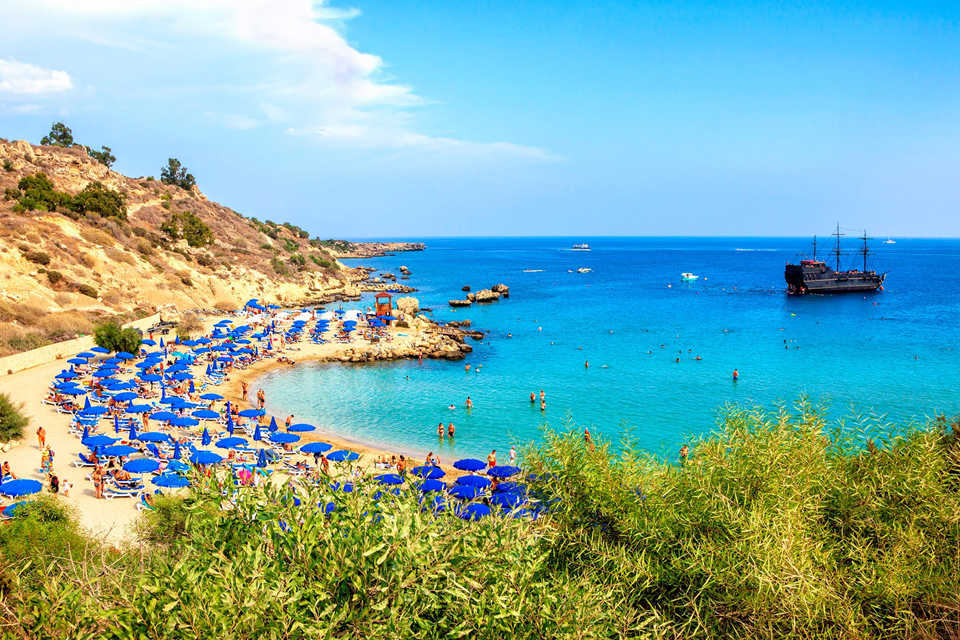
The most popular bathing spot is Konnos Beach, which is four kilometers east of Agia Napa, on the east coast, north of Cape Greco and south of Protaras. Considered one of the best beaches on Cyprus, it measures only 35 by 200 meters, but is nicely sheltered from strong winds out of the east. The water is always a brilliant, transparent aquamarine, and nearly always calm.
The chapel of Agioi Anargyroi is one of the few freestanding buildings on the Cape. It is a room-sized masonry structure with a shaded portico all around, and a brilliantly blue-painted barrel-domed roof whose color matches that of the nearby sea. This landmark is near an abandoned hermit's cave. It's a popular place for wedding photos.